English
 Indonesia

Direct Answer:
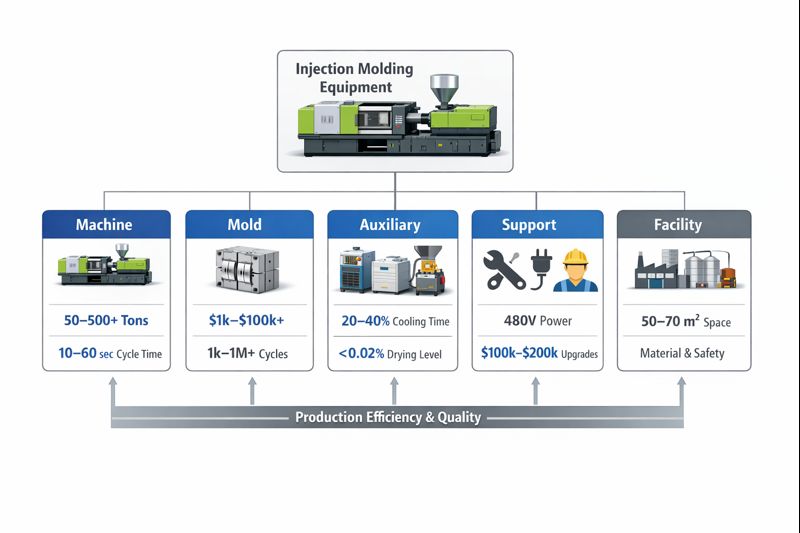
Injection molding requires a combination of machines, molds, auxiliary systems, and support infrastructure. Choosing the right equipment depends on part size, production volume, material type, and precision requirements. Missing any critical component can reduce product quality, slow production, or increase costs.
1. Injection Molding Machine: Types and Tonnage
Definition: An injection molding machine melts and injects plastic resin into a mold under high pressure.
Key Considerations:
| Feature | Explanation | Practical Tip |
|---|---|---|
| Machine Type | Hydraulic, Electric, Hybrid | Electric machines offer precision and energy efficiency; hydraulic is more cost-effective for large parts. |
| Tonnage | Clamping force (tons) needed to hold mold closed | Choose minimum tonnage based on part size and mold complexity. Example: a 50-ton machine for small consumer parts vs 500-ton for automotive panels. |
| Shot Size | Maximum plastic volume per cycle | Must match part volume to avoid incomplete fills or excessive cycle time. |
| Cycle Time | Time for one molding cycle | Optimizing tonnage, temperature, and mold design can reduce cycle time 10–30%. |
Quick Tip: Machines below 100 tons are usually for prototyping and small parts; above 300 tons is industrial production.
2. Molds: Prototype vs Production
Definition: A mold is the custom tool that shapes molten plastic into the final part.
Comparison Table:
| Type | Cost | Durability | Best Use |
|---|---|---|---|
| Prototype Mold | Low (~$1k–$5k) | 1,000–5,000 cycles | Small batch, testing designs |
| Production Mold | High (~$10k–$100k+) | 50,000–1,000,000+ cycles | High-volume manufacturing |
Tips:
- Material selection for molds (steel, aluminum) affects durability and cost.
- Mold complexity increases cooling and injection challenges.
3. Auxiliary Equipment
Auxiliary equipment ensures consistent molding, precise temperature control, and material preparation.
| Equipment | Purpose | Notes |
|---|---|---|
| Chiller / Water System | Cools mold & machine | Improves cycle time & reduces warping |
| Thermolator / Hot Oil Circulator | Maintains mold temperature | ±1–2°C control critical for precision parts |
| Dryer / Dehumidifier | Removes moisture from hygroscopic resins | Prevents bubbles, voids, and poor surface finish |
| Hopper Loader / Resin Handling | Transfers resin from storage to machine | Automates material feed, reduces contamination risk |
Numeric Insight:
- Cooling can represent 20–40% of cycle time; efficient chillers improve throughput significantly.
- Moisture-sensitive plastics (e.g., Nylon, PET) must be dried to <0.02% water content.
4. Support and Maintenance Systems
Infrastructure Needed:
- Electrical Service: High-capacity (often 480V 3-phase) for large machines.
- Plumbing: Water and hydraulic lines for cooling & machine operation.
- Maintenance Tools & Staff: Skilled operators and technicians are essential; experienced personnel reduce downtime by 20–30%.
Quick Check: Large facilities may spend $100k–$200k+ upgrading electrical and plumbing before running production.
5. Additional Considerations
- Space & Layout: Machines + auxiliary equipment need sufficient space for operation, maintenance, and safety aisles.
- Material Storage: Silos, bins, and conveyors prevent contamination and simplify handling.
- Safety Systems: Mold guards, emergency stops, and temperature monitoring improve safety and reduce risk.
Visualizable Tip: A 500-ton molding cell may occupy ~50–70 m², including machine, chiller, dryer, and material handling equipment.
6. Quick Reference Checklist
| Equipment Category | Must-Have Items | Notes |
|---|---|---|
| Injection Machine | Hydraulic/Electric, proper tonnage, shot size | Match machine to part size & production volume |
| Mold | Prototype or production mold | Material & cycles determine cost & lifespan |
| Auxiliary | Chiller, thermolator, dryer, hopper loader | Precise temp & moisture control critical |
| Support | Electrical, plumbing, maintenance staff | Avoid bottlenecks & downtime |
| Facility | Space, storage, safety systems | Layout affects efficiency and safety |
Summary:
Successful injection molding is more than just the machine. Molds, auxiliary systems, skilled staff, and proper infrastructure are equally important. Investing in precise temperature control, proper drying, and layout optimization can reduce cycle time, improve quality, and save significant costs over time.