 English
 Indonesia

You have a new part to source. The drawing is on your desk, the material is not yet fixed, and the production volumes are still being debated. Before requesting a quote, the question usually comes down to this: should the part be injection molded or compression molded? The short answer is that injection molding suits complex, high-volume thermoplastic parts with tight tolerances, while compression molding suits large, simple shapes, rubber components, and thermoset composites where strength and low internal stress matter more than cycle time. Both processes are mature and dependable, but they are not interchangeable. Choosing correctly affects your tooling budget, lead time, unit price, part quality, and long-term reliability.
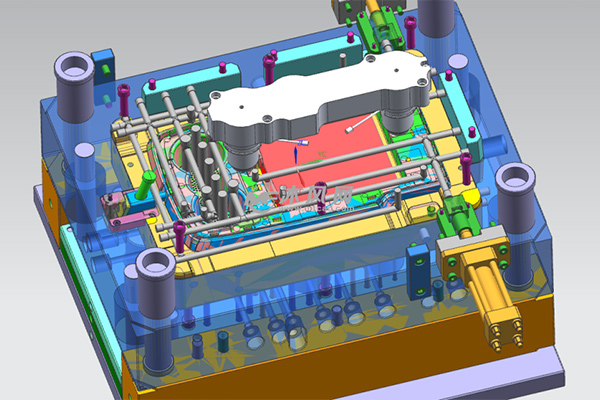
What Is Injection Molding?
Injection molding starts with plastic pellets that are melted in a heated barrel and then injected under pressure into a closed metal mold. The molten material fills the cavity, cools, and solidifies before the mold opens and the part is ejected. Because the material is forced through runners and gates, the process can produce very detailed features without requiring manual placement of material in each cycle.
Injection molding is the preferred route when the part has complex geometry, thin walls, inserts, or tight tolerances. It also supports a high degree of automation, which makes it effective for large production runs. Typical parts include automotive spare parts, mechanical components, connectors, housings, and everyday consumer products.
The main trade-off is tooling. An injection mold must manage melt flow, cooling, ejection, and optional slides or lifters for undercuts. That makes the initial mold investment higher and the lead time longer. In exchange, cycle times are short, and once the process is validated, part-to-part consistency is excellent.
What Is Compression Molding?
Compression molding takes a different approach. A pre-measured amount of material, often a sheet, pellet, or dough-like charge, is placed directly into an open mold cavity. The mold is then closed under hydraulic pressure, and heat causes the material to flow and fill the cavity under pressure. After the part cures or cools, it is removed and secondary flash is trimmed.
This process is common for thermoset materials, rubber compounds, and glass-reinforced composites such as sheet molding compound or bulk molding compound. Because the material does not travel through long runners and gates, compression molding preserves fiber length better and creates lower internal stress in the final part. It also allows very large, flat or shallow parts to be made with simpler tooling than injection molding.
However, compression molding is slower and more labor-intensive. Cycle times are usually longer, and the process is less suited to complex geometry with undercuts, fine surface details, or tight dimensional tolerances. It remains an excellent choice when the material and part shape align with its strengths.
Injection Molding vs. Compression Molding at a Glance
| Factor | Injection Molding | Compression Molding |
|---|---|---|
| Material form | Melted plastic pellets injected under pressure | Pre-measured charge placed in an open mold and compressed |
| Part complexity | Complex geometry, undercuts, thin walls, inserts | Simple, flat, or large shapes; limited undercuts |
| Tooling cost | Higher initial investment due to cooling, ejection, and slides | Lower for simple parts; simpler mold construction |
| Cycle time | Fast, often under one minute for small parts | Slower, usually one to several minutes per cycle |
| Tolerances | Typically ±0.1 mm for many thermoplastics | Typically ±0.25 mm or more, depending on material |
| Waste | Runners and sprues create scrap unless hot runner systems are used | Low material waste; minimal runner scrap |
| Typical materials | Thermoplastics, elastomers, liquid silicone rubber | Thermosets, rubber, glass-filled composite sheet |
How to Choose the Right Molding Process
Part Complexity and Geometry
If your part has ribs, bosses, snap-fit features, fine surface textures, or enclosed undercuts that require sliders, injection molding is almost always the better choice. Compression molding works well for flat panels, trays, and shallow housings, but it becomes difficult when the material must be pushed into narrow and complex features. For those shapes, injection molding gives designers far more freedom.
Material Type
Thermoplastic materials flow easily and are processed by melting and cooling, which makes them ideal for injection molding. Thermosets and rubber compounds cure under heat and pressure, so they are often better suited to compression molding. If you are working with a high-fiber composite material and need to preserve fiber length for mechanical strength, compression molding is often the better route. For a lightweight thermoplastic part that must meet a tight dimensional tolerance, injection molding is usually the answer.
Production Volume and Cost
Volume is a critical factor. Injection molding requires a higher upfront mold investment, but the fast cycle times and high level of automation reduce the per-part cost as volume increases. Compression molding has a lower starting point for simple tooling, but the slower cycle times and more manual handling keep the unit cost higher in mass production. For low-to-medium volumes, compression molding can be attractive. For high volumes, injection molding typically wins.
Dimensional Tolerance and Consistency
Injection molding provides very repeatable parts because every cycle is driven by the injection unit and cooling system. Compression molding depends more on operator placement, charge weight, and press speed, which can introduce more variation. If your assembly requires parts to fit together with little play, choose injection molding. If the part is functional but does not need tight precision, compression molding may be sufficient and more economical.
Cost and Tooling Considerations
Mold cost is often the deciding factor for smaller production runs. An injection mold includes cooling channels, ejection systems, and precise venting, so it is more expensive to design and build. A compression mold is simpler in construction, especially for large flat parts, and can sometimes be delivered faster. However, you must compare that saving carefully. A cheaper mold is not useful if the part design requires the accuracy and repeatability of injection molding.
Maintenance also matters. Injection molds contain more moving parts and require more care, but their long production life spreads that cost over many pieces. Compression molds are simpler and easier to maintain, but they labor through slower cycles. For high-output programs, the production cost difference is usually much larger than the initial tooling difference.
Application Examples in Manufacturing
At IMTEC Mould, our injection molding capabilities cover a wide range of industrial parts, from automotive spare parts and mechanical components to plastic grab bars and shower seats. These parts require consistent wall thickness, good surface finish, and reliable fit in final assemblies. Injection molding allows us to combine multiple features in one mold and produce parts efficiently for long-running programs.
For components that need two materials or molded-in inserts, such as a soft-touch surface on a rigid plastic base or a metal thread embedded in a plastic body, we also offer insert and overmolding solutions. These methods are variations of injection molding and are used when a single material is not enough. They add design and assembly efficiency, especially in automotive and mechanical applications.
Compression molding, meanwhile, is widely used for rubber gaskets, large electrical housings, fiberglass-reinforced panels, and certain thermoset parts. Those applications value material strength, low stress, and simple tooling over complex geometry. If your part falls into one of those categories, compression molding is worth evaluating before spending money on an injection mold.
Final Recommendation
There is no universal winner between injection molding and compression molding. The right process depends on your part geometry, material, production volume, tolerance requirements, and budget.
- Use injection molding when you need complex geometry, tight tolerances, high volume, thermoplastic materials, or automated production.
- Use compression molding when you have a large, simple shape, a thermoset or rubber material, low-to-medium volume, or high fiber-filled composite with strong mechanical requirements.
If you are unsure, review the part drawing first and ask two questions: will the material flow into the mold details, and will the cycle time meet your cost target? The answers will point you toward the right process before any mold steel is cut.


