 English
 Indonesia

Injection Molding vs CNC Machining
Executive Summary
Choosing between Injection Molding and CNC Machining depends primarily on production volume, budget structure, and product lifecycle.
- CNC Machining is ideal for low-volume production, rapid prototyping, and projects requiring tight tolerances or frequent design changes. It requires no tooling investment and offers fast turnaround.
- Injection Molding is best suited for mass production. Although it involves a significant upfront tooling cost, the unit price drops dramatically at higher volumes.
- For quantities below a few hundred pieces, CNC is typically more economical.
- For volumes in the thousands or more, injection molding generally becomes the more cost-effective solution.
- If your design is still evolving, CNC provides flexibility. If your design is finalized and demand is stable, injection molding delivers long-term cost efficiency.
In short:
Small quantity → CNC Machining
Mass production → Injection Molding
Uncertain demand → Start with CNC
Stable, high-volume product → Invest in tooling
In the following sections, we will compare cost structure, lead time, materials, tolerances, and real-world application scenarios to help you determine the best manufacturing process for your project.
What Is Injection Molding?
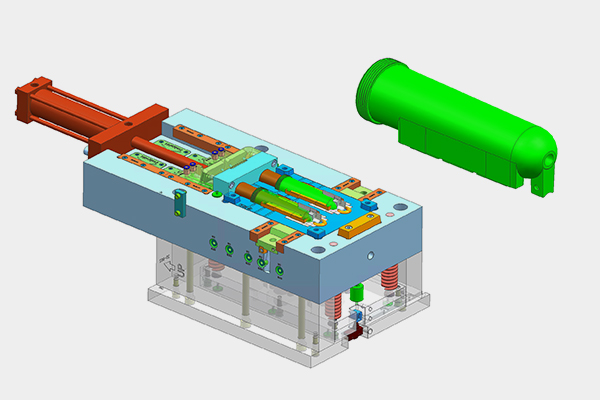
Injection molding is a high-efficiency manufacturing process used to produce plastic parts in large volumes. The process involves melting thermoplastic material and injecting it under high pressure into a custom-designed steel or aluminum mold. Once cooled and solidified, the part is ejected and the cycle repeats.
How It Works (Simplified)
- Plastic pellets are heated until molten.
- The material is injected into a precision mold cavity.
- The part cools and solidifies.
- The mold opens and the finished component is ejected.
Cycle times typically range from 10 to 60 seconds depending on part size and complexity.
Key Characteristics
1. Requires Tooling (Mold Investment)
Injection molding requires a custom mold, which represents the largest upfront cost.
Tooling costs typically range from:
- $3,000–$10,000 for simple parts
- $15,000–$50,000+ for complex, multi-cavity molds
However, once the mold is built, production becomes highly efficient.
2. Very Low Unit Cost at Scale
After tooling is completed, the per-unit cost drops significantly because:
- Production is automated
- Cycle times are short
- Material waste is minimal
- Multi-cavity molds increase output
This makes injection molding ideal for medium- to high-volume production.
3. Best for Stable, Long-Term Products
Injection molding is most suitable when:
- Annual volume exceeds several thousand units
- The design is finalized (design freeze)
- The product lifecycle is long
- Cost reduction in mass production is a priority
Frequent design changes can be expensive, as mold modifications may be required.
Typical Applications
- Consumer product housings
- Automotive interior components
- Electrical enclosures
- Industrial plastic parts
- Medical plastic components
Strategic Consideration for Buyers
Injection molding is not simply a production method — it is a cost strategy.
You invest upfront in tooling to achieve long-term cost efficiency. The larger the production volume, the lower the effective cost per unit becomes.
This is why injection molding is often selected when transitioning from prototype stage to mass production.
What Is CNC Machining?
CNC machining is the best choice for low-volume production, high precision parts, and rapid prototyping. It requires no tooling investment and delivers tight tolerances immediately.
CNC (Computer Numerical Control) machining is a subtractive manufacturing process. Material is removed from a solid block (metal or plastic) using automated cutting tools controlled by programmed code.
Unlike injection molding, CNC machining does not require a mold. This eliminates upfront tooling cost and significantly reduces initial risk.
How Does CNC Machining Work?
- A CAD model is converted into CAM toolpaths.
- The machine removes material layer by layer.
- The part is finished, deburred, and inspected.
Typical turnaround:
- Prototype: 3–7 days
- Small batch (100–500 pcs): 1–3 weeks
When Is CNC Machining the Best Choice?
CNC machining is ideal when:
- Annual volume is below 500–1,000 units
- Design is still evolving
- Tight tolerances below ±0.02 mm are required
- Metal parts are needed (aluminum, stainless steel, brass)
- Time-to-market is critical
CNC Cost Structure Explained
CNC cost is primarily driven by:
- Machining time (machine hourly rate: $40–$120/hour)
- Material cost
- Tool wear
- Setup time
There is no break-even curve advantage like injection molding.
Unit cost remains relatively stable regardless of quantity.
Example:
- Aluminum housing
- 30 minutes machining time
- $80/hour rate
Estimated machining cost per part:
$40 (excluding material and finishing)
Producing 1 piece or 500 pieces will not significantly reduce per-unit cost.
Injection Molding vs CNC Machining: Direct Comparison
Which Is Cheaper?
CNC is cheaper at low volume. Injection molding is cheaper at high volume.
Break-even typically occurs between:
1,000 – 10,000 units, depending on tooling cost and geometry complexity.
Cost Comparison Table
| Factor | Injection Molding | CNC Machining |
|---|---|---|
| Tooling Cost | $3,000–$50,000+ | $0 |
| Unit Cost (Plastic Part) | $0.5–$5 | $15–$60 |
| MOQ | Usually 500+ | No MOQ |
| Cost Advantage | High volume | Low volume |
| Break-even Volume | 1,000–10,000 pcs | Below 500 pcs |
| Design Change Cost | High (mold modification) | Low |
| Lead Time (Initial) | 2–6 weeks tooling | 3–7 days |
Break-Even Analysis (With Numbers)
Assume:
- Mold cost: $12,000
- Injection unit cost: $2
- CNC unit cost: $25
Total cost formulas:
Injection = $12,000 + ($2 × quantity)
CNC = $25 × quantity
Solve:
12,000 + 2Q = 25Q
12,000 = 23Q
Q ≈ 522 units
Break-even point ≈ 500–600 units
Above this quantity, injection molding becomes more economical.
Below this quantity, CNC machining is safer.
Lead Time Comparison
| Stage | Injection Molding | CNC Machining |
|---|---|---|
| Prototype | 2–6 weeks | 3–7 days |
| Mass Production Speed | Very fast (seconds per cycle) | Slower (minutes per part) |
| Design Iteration | Expensive | Easy |
If your product lifecycle is short (under 1 year), CNC reduces risk.
If your product will sell for 3–5 years, injection molding maximizes margin.
Tolerance and Precision
CNC machining typically achieves:
- ±0.01 mm tolerance
- Superior surface flatness
- Better concentricity control
Injection molding typically achieves:
- ±0.05 mm to ±0.1 mm
- Material shrinkage variability
- Possible warpage in thin-wall designs
For high-precision mechanical assemblies, CNC is preferred.
Material Capability Comparison
| Material Type | Injection Molding | CNC Machining |
|---|---|---|
| ABS | Yes | Yes |
| PP | Yes | Yes |
| PA (Nylon) | Yes | Yes |
| Aluminum | No | Yes |
| Stainless Steel | No | Yes |
| Glass-filled plastics | Yes | Yes |
Injection molding dominates thermoplastics.
CNC dominates metals.
Clear Decision Framework
Choose CNC if:
- You need 10–300 units
- You are testing the market
- You require metal parts
- Design is not frozen
Choose Injection Molding if:
- You need 1,000+ units
- Design is stable
- Unit margin matters
- Long-term production is planned
Real-World Decision Scenarios
Scenario 1: Startup Launching a New Product
Best choice: CNC machining first, then injection molding later.
Why?
- Market demand is uncertain.
- Design changes are likely.
- Cash flow is limited.
Recommended path:
- Produce 50–200 units using CNC.
- Validate market response.
- Freeze design.
- Invest in tooling once demand exceeds 500–1,000 units.
Risk reduction strategy:
Avoid spending $15,000 on a mold before confirming product-market fit.
Scenario 2: Established Product with Stable Annual Demand
Best choice: Injection molding.
Conditions:
- Annual demand: 5,000+ units
- Product lifecycle: 3+ years
- Design is finalized
Cost example:
- Mold cost: $18,000
- CNC unit cost: $28
- Injection unit cost: $3.5
- Annual volume: 8,000 pcs
Annual CNC cost:
8,000 × 28 = $224,000
Annual Injection cost:
18,000 + (8,000 × 3.5) = $46,000
Savings in first year:
$178,000
ROI achieved in less than 4 months.
Scenario 3: High-Precision Mechanical Component
Best choice: CNC machining.
When tolerance below ±0.02 mm is required, injection molding may not maintain dimensional stability due to:
- Thermal shrinkage
- Material flow variation
- Warpage in thin sections
CNC machining ensures:
- Stable dimensional accuracy
- Better flatness control
- Consistent fit in assemblies
Cost Curve Visualization (Conceptual Model)
Injection molding cost curve:
- High initial investment
- Rapid drop in unit cost as volume increases
CNC machining cost curve:
- No initial investment
- Flat per-unit cost regardless of volume
This difference creates the break-even threshold.
At low volume → CNC dominates
At high volume → Injection dominates
Lifecycle Cost Model
Decision should not be based on unit price alone.
Consider:
- Product lifecycle length
- Expected design revisions
- Market uncertainty
- Cash flow constraints
- Storage and inventory planning
Total cost = Tooling + Production + Engineering changes + Time-to-market impact
Short lifecycle (<1 year):
CNC reduces sunk cost risk.
Long lifecycle (>3 years):
Injection maximizes profit margin.
Engineering Depth: Design Constraints Comparison
Injection Molding Design Rules
- Draft angle required (1°–3°)
- Uniform wall thickness preferred
- Sink mark risk in thick sections
- Gate placement affects surface quality
CNC Machining Design Rules
- Tool diameter limits internal corners
- Deep cavities increase machining time
- Undercuts require multi-axis machining
- Material hardness affects cost
These constraints directly influence manufacturability and cost.
Strategic Recommendation for OEM Buyers
The correct decision is rarely about technology superiority.
It is about:
- Volume forecast accuracy
- Design maturity
- Financial strategy
- Margin optimization timeline
Injection molding is a long-term cost optimization strategy.
CNC machining is a short-term risk control strategy.
Frequently Asked Questions
Which is cheaper: injection molding or CNC machining?
CNC machining is cheaper for low volumes. Injection molding is cheaper for high volumes.
If you need fewer than 500–1,000 units, CNC typically has lower total cost because there is no tooling investment.
If production exceeds several thousand units, injection molding significantly reduces unit cost and becomes more economical.
What is the break-even point between injection molding and CNC?
The break-even point usually ranges between 500 and 5,000 units.
It depends on:
- Mold cost
- Part complexity
- CNC machining time
- Material selection
For example:
- Mold cost: $12,000
- CNC unit cost: $25
- Injection unit cost: $2
Break-even ≈ 500–600 units.
Is CNC machining more precise than injection molding?
Yes, CNC machining generally offers tighter tolerances.
Typical tolerances:
- CNC machining: ±0.01 mm to ±0.02 mm
- Injection molding: ±0.05 mm to ±0.1 mm
Injection molding may experience dimensional variation due to material shrinkage and thermal cooling effects.
Is injection molding faster than CNC machining?
Injection molding is faster in mass production. CNC machining is faster for prototypes.
Injection molding requires 2–6 weeks to build tooling.
After tooling is complete, production cycles can be as short as 10–30 seconds per part.
CNC machining can deliver prototypes in 3–7 days but takes minutes per part during production.
Can CNC machining be used for plastic parts?
Yes. CNC machining works for both plastics and metals.
Common CNC plastics include:
- ABS
- Nylon (PA)
- POM
- Acrylic
- PTFE
However, CNC plastic parts are typically more expensive per unit compared to molded plastic parts in large quantities.
When should I switch from CNC to injection molding?
Switch when your annual demand becomes stable and exceeds 1,000–3,000 units.
Signs you should invest in tooling:
- Design is finalized
- Market demand is validated
- You need lower per-unit cost
- Long-term margin optimization is required
Final Decision Summary
Choose CNC machining if:
- You need 10–500 units
- Design changes are expected
- Tight tolerance is critical
- Metal parts are required
- Market demand is uncertain
Choose Injection Molding if:
- You need 1,000+ units
- Design is frozen
- Product lifecycle exceeds 2–3 years
- Cost reduction in scale is the priority
Practical Recommendation
If you are unsure, start with CNC for prototyping and early production.
Once demand stabilizes, transition to injection molding to maximize long-term profitability.
This hybrid approach minimizes risk while optimizing cost over time.


